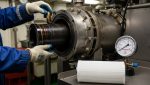
The mechanical seal is often the most precision-engineered component in a centrifugal pump, yet it is frequently the first to fail. In the offshore oil and gas industry, a seal failure is more than an inconvenience—it is a safety hazard and a production stopper.
Whether you are running seawater injection pumps or crude export pumps, understanding why seals fail is the first step to preventing it. This guide explores the common causes of failure and how to identify them.
1. Dry Running: The #1 Killer Mechanical seals rely on the fluid they are sealing to provide lubrication between the seal faces.
-
The Symptom: If a pump is run “dry” (without fluid) even for a few seconds, the friction generates intense heat. This causes “heat checking”—fine radial cracks on the seal face that look like a shattered windshield.
-
The Fix: Ensure suction valves are fully open before starting the pump. Install dry-run protection sensors that trip the motor if fluid is lost.
2. Chemical Incompatibility Offshore processing involves aggressive chemicals, from sour crude (H2S) to hydrochloric acid.
-
The Problem: Using a standard Viton or Nitrile elastomer (O-ring) in a chemically aggressive environment can cause the rubber to swell, blister, or dissolve.
-
The Fix: Always consult the chemical compatibility charts. For extreme environments, upgrading to FFKM (Perfluoroelastomer) or specialized EagleBurgmann seals designed for specific chemical loads is necessary.
3. Misalignment and Vibration A seal can only compensate for a certain amount of movement.
-
The Issue: If the pump and motor shafts are not perfectly aligned, or if the pump suffers from cavitation vibration, the seal faces will physically separate or “chatter.” This allows fluid to leak out and abrasive particles to get in.
-
The Solution: Laser alignment of shafts is mandatory during installation. Regular vibration analysis can detect bearing wear before it shakes the seal to pieces.
4. Flushing System Failure (API Plans) High-pressure seals often require an external flush system (like API Plan 52 or 53) to keep the faces cool and clean.
-
The Check: If the barrier fluid in the seal pot is dirty, empty, or at the wrong pressure, the seal will overheat. Regular inspection of the seal support system is just as important as inspecting the pump itself.
Conclusion A mechanical seal does not usually fail “all of a sudden.” It fails because of operational errors or poor selection. By partnering with recognized leaders like EagleBurgmann and adhering to strict installation protocols, operators can turn their seals from a liability into a reliable asset.